
The Four Waves of the AI Workforce Strategy and How They Will Define the Next Era of Enterprise Competitive Advantage
1. Introduction: Every Technological Revolution Begins with Fear
When the steam engine transformed manufacturing during the Industrial Revolution, thousands of skilled craftsmen feared that machines would render human labor obsolete. The introduction of electricity into factories raised similar concerns as mechanized production accelerated beyond anything previously imaginable. During the late twentieth century, computers were expected to eliminate administrative work, while the rise of the Internet was widely predicted to dismantle traditional business models and permanently reduce employment across multiple industries.
Today, Artificial Intelligence (AI) has become the latest subject of this recurring narrative. Daily headlines warn of software developers being replaced by coding assistants, customer service representatives displaced by intelligent chatbots, financial analysts outperformed by predictive algorithms, and creative professionals competing with generative AI systems capable of producing content within seconds. For many professionals, students, entrepreneurs, and even experienced business leaders, the conversation has increasingly shifted from curiosity to uncertainty.
History, however, offers a far more balanced perspective than public sentiment often allows. Every major technological revolution has undoubtedly eliminated certain occupations and transformed many others. Yet none has reduced humanity’s overall capacity to create economic value. Instead, each revolution has given rise to entirely new industries, professions, business models, and entrepreneurial opportunities that were unimaginable before the technology became mainstream.
Few people could have predicted the emergence of cybersecurity specialists, cloud architects, mobile application developers, digital marketing strategists, search engine optimization consultants, or social media managers during the early years of the Internet. Similarly, the widespread adoption of cloud computing created demand for DevOps engineers, cloud security specialists, site reliability engineers, and cloud solution architects, careers that scarcely existed only two decades ago. Technological progress has consistently demonstrated that while specific tasks become automated, human capability evolves towards higher value activities requiring judgement, creativity, governance, and strategic decision making.
AI should therefore be viewed through the same historical lens, albeit at a significantly greater pace. Unlike many previous technologies that transformed individual industries, AI possesses the characteristics of a foundational technology capable of influencing virtually every sector of the global economy simultaneously. Manufacturing, healthcare, banking, education, retail, agriculture, logistics, professional services, and government institutions are all beginning to redesign workflows around intelligent automation. Such a broad transformation inevitably reshapes labor markets, not by simply eliminating jobs, but by creating entirely new categories of economic participation.
The central question facing business leaders is therefore no longer whether Artificial Intelligence will replace certain roles. That transition has already begun. The more important strategic question is whether organizations, educational institutions, governments, and individuals are preparing for the new professions that will emerge as AI becomes embedded within every aspect of business and society.
This article argues that the coming decade will witness the birth of an entirely new AI economy. Within this economy, careers will extend far beyond software engineering or machine learning research. New opportunities will emerge in governance, auditing, regulation, operations, infrastructure, healthcare, education, manufacturing, entrepreneurship, and countless other disciplines that require uniquely human judgement alongside intelligent working systems. The organizations and professionals who recognize this transition early will not merely adapt to AI. They will actively shape the next generation of industries, enterprises, and careers that define the global economy before 2035.
2. AI is a General-Purpose Technology and Not Another Software Trend
Throughout modern economic history, only a handful of technologies have fundamentally reshaped the way societies create value. Economists often refer to these as General Purpose Technologies because their influence extends well beyond the industries in which they were originally developed. Rather than solving a single business problem, these technologies become foundational building blocks upon which entirely new industries, products, services, and professions are created.
The steam engine transformed transportation, manufacturing, mining, and international trade. Electricity fundamentally altered production, communication, healthcare, and urban development. The Internet connected businesses, governments, consumers, and financial markets on a global scale while enabling entirely new business models that continue to evolve today.
AI belongs in this rare category of transformational technologies.
Unlike traditional enterprise software that automates a predefined process, AI has the ability to learn patterns, generate insights, assist with decision making, create content, recognize images, interpret language, analyze large volumes of information, and increasingly perform complex cognitive tasks that previously required significant human effort. More importantly, these capabilities are applicable across virtually every industry rather than being confined to a single sector.
This distinction is important for business leaders because General Purpose Technologies rarely create isolated market opportunities. Instead, they trigger widespread economic restructuring. As organizations adopt these technologies, they redesign business processes, redefine organizational structures, introduce new governance models, and develop entirely new operating practices. Career evolution naturally follows these organizational changes.
Consider the evolution of enterprise computing during the 1980s and 1990s. Initially, computers were viewed primarily as tools for automating administrative work. Within two decades, however, organizations required database administrators, network engineers, enterprise architects, cybersecurity specialists, software developers, business analysts, digital marketers, user experience designers, and cloud engineers. None of these professions existed at meaningful scale before computing became deeply integrated into business operations.
The Internet followed a remarkably similar trajectory. During its early years, many executives viewed it simply as another communication channel. Today, it underpins electronic commerce, digital payments, global supply chains, remote collaboration, streaming services, online education, telemedicine, and digital advertising. Entire industries employing millions of professionals have emerged because businesses gradually reimagined how value could be created in a connected world.
AI is beginning to follow the same pattern, although the pace of adoption is significantly faster. Organizations are no longer evaluating AI as a standalone technology initiative managed exclusively by information technology departments. Instead, executive leadership teams increasingly recognize AI as an enterprise capability that influences strategy, operations, finance, human resources, legal functions, customer engagement, product development, cybersecurity, and corporate governance simultaneously.
| Technology | Initial Perception | Long Term Business Transformation | Examples of New Professions Created |
| Steam Engine | Mechanized manufacturing | Industrial production and transportation | Mechanical engineers, factory managers, railway planners |
| Electricity | Factory modernization | Electrification of industries and cities | Electrical engineers, power systems specialists, appliance designers |
| Computers | Office automation | Enterprise digitization | Software developers, database administrators, IT consultants |
| Internet | Faster communication | Digital economy and global connectivity | Digital marketers, cybersecurity analysts, cloud architects, ecommerce specialists |
| AI | Task automation | Enterprise-wide intelligent operations and decision support | AI auditors, AI governance specialists, AI workflow architects, AI performance managers, AI compliance officers |
The implications extend beyond large corporations. Small businesses can automate administrative processes that previously required additional employees. Healthcare providers can accelerate clinical documentation while improving patient engagement. Manufacturers can optimize production planning through predictive intelligence. Financial institutions can strengthen fraud detection using adaptive algorithms. Educational institutions can personalize learning experiences for students at scale. Governments can improve citizen services through intelligent automation while strengthening public administration.
In each of these examples, technology alone does not create lasting value. Sustainable transformation occurs only when organizations redesign workflows, establish governance frameworks, define accountability, measure outcomes, and continuously improve AI performance. Those responsibilities remain fundamentally human, creating demand for new expertise that extends well beyond software development.
One of the most significant misconceptions surrounding AI is the assumption that automation reduces the need for people. In reality, history demonstrates the opposite pattern. As technologies become more capable, organizations require more specialized professionals to manage implementation, oversight, compliance, optimization, risk management, performance measurement, and strategic alignment. Higher levels of automation often lead to higher levels of organizational complexity, requiring equally sophisticated human leadership.
For executive decision makers, this distinction carries strategic significance. Organizations that view AI merely as another software procurement exercise are likely to realize incremental productivity improvements. Organizations that recognize AI as a General-Purpose Technology will redesign business models, redefine workforce strategies, and create entirely new sources of competitive advantage.
That distinction also explains why the conversation should move beyond the familiar question of which jobs AI might replace. The more consequential question is which professions will emerge as every industry begins reorganizing around intelligent systems. History consistently suggests that whenever a General-Purpose Technology transforms the economy, new careers inevitably follow.
3. AI and the AI Bubble Are Not the Same Thing – AI is Here to Stay
One of the greatest strategic mistakes organizations can make during periods of technological disruption is confusing a transformational technology with the investment cycle surrounding it. Throughout modern economic history, breakthrough innovations have often been accompanied by periods of extraordinary investor enthusiasm, aggressive capital deployment, inflated valuations, and unrealistic expectations. While financial markets eventually correct these excesses, the underlying technologies frequently continue reshaping industries for decades.
In the Dot Com era between 1995 and 2000, investors aggressively funded internet startups with little regard for sustainable business models or long-term profitability. When the bubble burst, thousands of companies disappeared and billions of dollars in market value were erased. Yet the Internet itself continued its remarkable evolution, ultimately giving rise to companies such as Amazon, Google, Netflix, Salesforce, Shopify, and countless digital businesses that today form the backbone of the global economy.
AI appears to be following a comparable trajectory. Record levels of venture capital investment, unprecedented infrastructure spending, and intense competitive pressure among technology companies have contributed to extraordinary valuations across the AI ecosystem. Global technology companies are collectively investing hundreds of billions of dollars in graphics processing units, data centers, semiconductor capacity, and energy infrastructure to support increasingly sophisticated AI models. These investments reflect confidence in the long-term potential of AI, but they also create expectations that may exceed near term commercial returns.
As we discussed in our previous article, What Really Matters in Enterprise AI Strategy, this distinction is important for executive decision makers. The AI bubble should primarily be viewed as a financial phenomenon driven by investor expectations, competitive positioning, and the race to build large scale AI infrastructure. AI itself should be viewed as a technological and economic transformation driven by measurable improvements in productivity, speed, knowledge discovery, and decision support. Although these two developments are occurring simultaneously, they should not be interpreted as the same phenomenon.
This distinction carries important implications for workforce planning. If an executive assumes that AI adoption is merely a temporary consequence of investor enthusiasm, workforce transformation may be viewed as something that can be delayed until market conditions stabilize. History suggests otherwise. Organizations continued adopting the Internet long after the Dot Com bubble collapsed because the technology delivered undeniable business value. Likewise, enterprises continued migrating to cloud computing despite periods of economic uncertainty because the operational advantages became increasingly difficult to ignore.
The same principle applies to AI careers. Even if financial markets eventually moderate investment levels, organizations will continue requiring professionals capable of implementing AI responsibly, governing intelligent systems, validating outputs, measuring performance, ensuring regulatory compliance, and integrating AI into business operations. These responsibilities are not dependent upon market valuations. They emerge because enterprises increasingly rely on AI to support critical business functions.
Another important consideration is accountability. Enterprise software traditionally executed predefined business rules, making responsibility relatively straightforward to assign. AI introduces probabilistic decision making, continuous learning, and adaptive behavior that require greater human oversight. As organizations delegate more operational decisions to intelligent systems, executives remain accountable for the outcomes generated by those systems. Corporate boards, regulators, shareholders, customers, and employees will continue expecting organizations to explain how AI decisions are made, monitored, measured, and corrected when necessary.
This growing emphasis on accountability creates an entirely new category of professional responsibility. Organizations will increasingly require specialists capable of evaluating AI performance, identifying unintended outcomes, documenting governance practices, validating model behavior, and ensuring that intelligent systems remain aligned with business objectives. Rather than reducing the importance of human expertise, widespread AI adoption elevates the importance of governance, oversight, and strategic leadership.
In many respects, this represents one of the defining characteristics of the AI economy. Previous waves of enterprise automation primarily focused on improving efficiency within existing business processes. AI introduces a fundamentally different challenge because it actively participates in knowledge work and decision support. As a result, organizations must establish new mechanisms for supervision, accountability, transparency, and performance management. These responsibilities cannot be delegated entirely to algorithms because they involve judgment, ethics, business context, regulatory interpretation, and organizational priorities.
| Dimension | AI Bubble | AI Economy |
| Primary Driver | Investor expectations and capital inflows | Business productivity and enterprise value creation |
| Time Horizon | Short to medium term | Multi decade transformation |
| Success Metric | Valuation growth | Sustainable business outcomes |
| Primary Concern | Funding, infrastructure spending, market competition | Adoption, governance, accountability, workforce transformation |
| Workforce Impact | Temporary hiring fluctuations | Long term creation of new professions and economic participation |
| Long Term Outlook | Subject to market cycles | Expected to expand across industries as AI adoption matures |
The implication for executive leaders is therefore straightforward. Business decisions should not be influenced by temporary market optimism or pessimism surrounding AI investments. Instead, organizations should evaluate AI through the same lens used for any other General-Purpose Technology by asking whether it creates sustainable competitive advantage, improves organizational capability, and strengthens long term business resilience.
The future AI workforce, therefore, should not be viewed as a consequence of speculative investment. It should be understood as the natural outcome of organizations integrating intelligent systems into the fabric of everyday business operations.
4. AI Does Not Replace Jobs. It Replaces Tasks.
Much of the public discussion surrounding AI assumes that occupations disappear as soon as intelligent systems become capable of performing certain activities. This assumption, while understandable, oversimplifies the way organizations actually operate. Businesses rarely hire individuals to perform a single task. They hire people to fulfill roles that combine technical expertise, judgment, collaboration, communication, accountability, and decision making. AI may automate portions of those responsibilities, but very few professions consist entirely of repetitive activities that can be delegated to intelligent systems.
Understanding this distinction is essential for executives responsible for workforce planning. Organizations should not evaluate AI by asking which jobs can be eliminated. Instead, they should examine which tasks within those jobs can be automated, accelerated, or enhanced while enabling employees to focus on higher value responsibilities. This perspective fundamentally changes how leaders approach talent transformation alongside AI transformations.
Consider the profession of a financial auditor. Modern AI systems can rapidly review thousands of invoices, identify anomalies, reconcile transactions, and detect unusual spending patterns that would otherwise require weeks of manual effort. However, determining whether those findings indicate fraud, operational weaknesses, regulatory concerns, or acceptable business exceptions still requires professional judgment, industry experience, and discussions with management. Rather than replacing auditors, AI allows them to spend less time searching for discrepancies and more time interpreting financial risk.
Healthcare provides another illustration. AI has demonstrated remarkable capability in assisting radiologists by identifying abnormalities in medical images and highlighting areas that require closer examination. These systems improve efficiency and consistency, but patients still expect physicians to explain diagnoses, evaluate clinical history, determine treatment options, communicate risks, and assume accountability for medical decisions. The physician’s role evolves from image interpretation alone toward comprehensive clinical decision making supported by intelligent systems.
The aviation industry has quietly followed a similar path for decades. Modern commercial aircraft operate with highly sophisticated automation capable of managing navigation, altitude, fuel optimization, and numerous routine flight operations. Nevertheless, airlines continue investing heavily in pilot training because automation cannot replace human judgment during unexpected weather conditions, equipment failures, emergency situations, or rapidly changing operational environments. Increased automation has not eliminated pilots. It has elevated the importance of decision making when situations fall outside predictable conditions.
These examples illustrate a broader organizational principle. Every profession can be viewed as a collection of interconnected tasks rather than a single activity. Some tasks involve repetitive processing and structured analysis, making them well suited for AI. Others require contextual understanding, ethical reasoning, interpersonal communication, negotiation, creativity, leadership, or accountability. Those responsibilities continue to depend upon human expertise and often become even more valuable as automation expands.
The relationship between tasks and occupations can be understood as a hierarchy rather than a direct replacement.
| Organizational Layer | Primary Purpose | Expected Impact of AI |
| Individual Tasks | Execute repetitive or structured activities | High levels of automation and acceleration |
| Business Processes | Coordinate related tasks into operational workflows | Significant optimization through intelligent orchestration |
| Professional Roles | Combine technical expertise with judgment and accountability | Evolution toward higher value responsibilities |
| Business Functions | Deliver organizational capabilities such as finance, legal, operations, and human resources | Redesign around AI assisted decision making |
| Enterprise Strategy | Allocate resources, manage risk, create competitive advantage | Continues to rely on executive leadership and human judgment |
This hierarchy explains why predictions about massive job elimination often fail to materialize in the manner originally expected. During the introduction of spreadsheets, many predicted the decline of accounting as a profession because calculations could now be performed instantly. Instead, accountants shifted toward financial planning, tax strategy, regulatory compliance, corporate finance, and business advisory services. The profession expanded because organizations demanded greater analytical insight rather than manual calculation.
The same pattern can be observed within customer service. AI powered conversational systems increasingly manage routine inquiries related to order status, account information, appointment scheduling, and frequently asked questions. Human representatives, however, continue handling emotionally sensitive situations, complex complaints, high value customer relationships, negotiation, and exception management. Customer service professionals are gradually becoming customer relationship specialists rather than information providers.
This transition represents an important strategic opportunity rather than merely an operational adjustment. As AI assumes responsibility for repetitive work, organizations gain the flexibility to redesign roles around innovation, collaboration, strategic planning, customer engagement, and continuous improvement. Employees spend less time performing predictable activities and more time solving problems that directly influence organizational performance.
For executive leadership teams, this perspective has significant implications for workforce strategy. Rather than measuring success through headcount reduction alone, organizations should evaluate how AI enables employees to create greater business value.
To help executives understand how AI careers will evolve over the next decade, Rudhran Strategy Consultants (RSC) has developed the “Four Waves of the AI Workforce” framework in detail in the next section. Rather than viewing emerging AI professions as an isolated collection of technical roles, the framework organizes workforce evolution into four interconnected waves that collectively determine how organizations build, integrate, govern, and ultimately derive competitive advantage from AI. While these waves emerge sequentially as AI adoption matures, they reinforce one another horizontally across the enterprise, creating an enduring ecosystem of capabilities that strengthens long term organizational resilience and competitive differentiation.
5. The Four Waves of the AI Workforce
The emergence of new professions rarely occurs randomly. Throughout history, every major technological revolution has produced distinct categories of work that evolve alongside the maturity of the technology itself. Each phase built upon the previous one, creating increasingly sophisticated professional roles as organizations learned to integrate technology into everyday business operations.
AI is following a similar trajectory. Although hundreds of specialized roles are expected to emerge over the coming decade, most can be organized into four broad categories that reflect how enterprises build, deploy, manage, and continuously improve intelligent systems. Understanding these categories provides business leaders with a more useful framework for workforce planning than simply examining individual job titles.
1st Wave – Foundational AI Builders: This consists of professionals responsible for building AI capabilities. These individuals develop foundation models, design machine learning architectures, engineer data platforms, optimize computing infrastructure, and create the technical systems that make enterprise AI possible. While these roles currently receive the greatest public attention, they represent only the initial stage of workforce evolution. As AI becomes increasingly accessible through commercial platforms, relatively few organizations will build foundational models from scratch. Most enterprises will instead adopt existing technologies and focus their efforts on business integration.
2nd Wave – Service Integrators: This centers on integration. Once organizations decide to deploy AI within business operations, technical expertise alone is no longer sufficient. Companies require professionals capable of redesigning workflows, aligning AI initiatives with business objectives, integrating intelligent systems into existing enterprise applications, training employees, measuring adoption, and ensuring that technology delivers measurable business outcomes. This category is expected to become substantially larger than the first because nearly every industry will require integration expertise regardless of whether it develops proprietary AI models.
3rd Wave – Policy Makers and Governors: This revolves around accountable people hired solely for governance. Intelligent systems operating within finance, healthcare, manufacturing, government, legal services, and other regulated industries cannot function without oversight. Organizations must establish policies governing accountability, regulatory compliance, model validation, performance monitoring, cybersecurity, ethical use, audit readiness, and risk management. These responsibilities extend well beyond information technology and increasingly become executive priorities involving boards of directors, regulators, legal teams, and operational leadership.
4th Wave – Human Experience Leaders or EQ’ers: RSC officially coins this (soon-to-be) major human workforce designation, the EQ’ers, where people with high emotional quotient (EQ) are hired to empower human experiences. As AI becomes embedded within products, services, workplaces, education, healthcare, and consumer interactions, organizations must design experiences that remain intuitive, trustworthy, and aligned with human expectations. Professionals working within this category combine technology with psychology, behavioral science, education, communication, branding, and customer experience. Their responsibility is not simply making AI functional but ensuring that people can confidently work alongside intelligent systems while maintaining trust and transparency.
Although these four categories evolve sequentially, they also reinforce one another. Every new AI application requires technical builders, business integrators, governance specialists, and professionals responsible for human adoption. Consequently, workforce demand expands horizontally across organizations rather than remaining concentrated within technology departments alone.
| Workforce Wave | Primary Objective | Representative Roles | Executive Priority |
| Wave 1: AI Builders | Develop AI platforms and technical capabilities | AI Engineers, Machine Learning Engineers, Data Engineers, Infrastructure Architects | Technology capability and innovation |
| Wave 2: AI Integrators | Embed AI into business operations | AI Solution Architects, AI Product Managers, Workflow Designers, Enterprise AI Consultants | Business transformation and productivity |
| Wave 3: AI Governors | Ensure responsible and accountable AI adoption | AI Auditors, AI Compliance Officers, AI Risk Managers, AI Governance Specialists, AI Performance Managers | Risk management, regulatory compliance, and executive accountability |
| Wave 4: Human Experience Leaders (EQ’ers) | Design trusted interactions between people and AI | AI Conversation Designers, AI Learning Architects, AI Experience Designers, AI Behavior Specialists | Workforce adoption, customer trust, and organizational change |
The significance of this framework becomes even clearer when viewed from an enterprise perspective. It explains why discussions about AI frequently overestimate the importance of software engineering while underestimating the broader workforce transformation that follows.
Business leaders should therefore resist the temptation to view AI talent exclusively through the lens of technical recruitment. An organization may successfully deploy the most sophisticated AI platform available, yet still fail to realize meaningful business value if employees are inadequately trained, governance structures remain undefined, accountability is unclear, or organizational processes continue reflecting pre-AI operating models. Sustainable competitive advantage emerges when all four workforce waves develop together rather than independently.
This broader perspective also changes how educational institutions, policymakers, and professionals should prepare for the coming decade. While demand for AI engineers will undoubtedly remain strong, the largest employment opportunities may ultimately arise within integration, governance, operational oversight, and human experience. These are professions that combine domain expertise with AI rather than competing against it. They also demonstrate that the AI economy extends far beyond computer science and creates meaningful opportunities for professionals from every other discipline and profession.
Having established this workforce framework, the next logical question becomes considerably more practical. What specific careers are likely to emerge within each of these four waves, and how might they reshape industries before 2035?
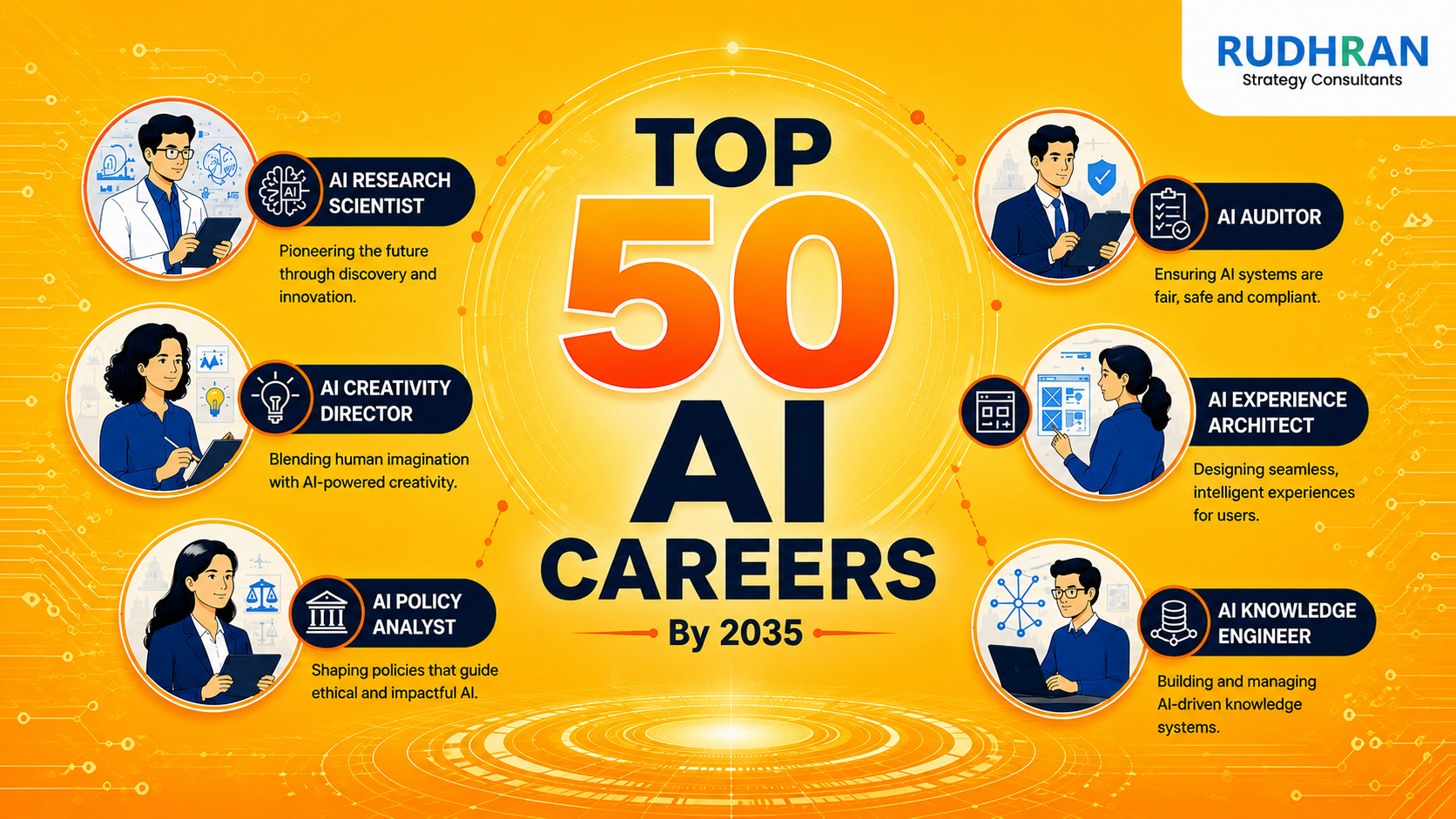
6. 50 New Careers Emerging in the AI Economy
The emergence of new professions has never been driven by technology alone. Careers evolve whenever organizations discover new ways to create value. AI simply accelerates this process by introducing entirely new operational capabilities while simultaneously creating responsibilities that did not previously exist. Every intelligent system deployed within an enterprise must be designed, integrated, governed, monitored, improved, and continuously aligned with changing business objectives. Each of these activities creates specialized work, often requiring expertise that extends well beyond software engineering.
This observation challenges one of the most common misconceptions surrounding AI careers. Public discussion frequently assumes that future employment opportunities will be concentrated primarily within technology companies. History suggests otherwise. The largest employment opportunities created by previous technological revolutions rarely remained within the industries that invented the technology. Instead, they expanded into every sector capable of applying those technologies to improve products, services, operational efficiency, customer engagement, and strategic decision making.
Using RSC’s Four Waves of the AI Workforce framework, the emerging professions expected before 2035 can be organized according to the primary business capability they enable.
| Workforce Wave | Examples of Emerging Careers | Primary Enterprise Value |
| AI Builders | Foundation Model Engineer, AI Infrastructure Architect, Synthetic Data Engineer, AI Platform Engineer, Edge AI Engineer, AI Security Engineer, AI Chip Optimization Specialist, AI Systems Engineer, AI Research Scientist, AI Compute Architect | Building enterprise AI capability |
| AI Integrators | AI Solution Architect, AI Workflow Designer, AI Product Manager, Enterprise AI Consultant, AI Transformation Manager, AI Customer Success Manager, AI Process Optimization Specialist, AI Knowledge Engineer, AI Integration Specialist, AI Operations Consultant, AI Change Management Lead, AI Training Specialist, AI Adoption Manager, AI Business Analyst, AI Value Realization Manager | Embedding AI into business operations |
| AI Governors | AI Auditor, AI Compliance Officer, AI Risk Manager, AI Governance Specialist, AI Ethics Advisor, AI Validation Engineer, AI Performance Manager, AI Policy Analyst, AI Regulatory Consultant, AI Security Auditor, Responsible AI Officer, AI Transparency Specialist, AI Quality Assurance Lead, AI Oversight Manager, AI Assurance Consultant | Governance, accountability, and enterprise trust |
| Human Experience Leaders | AI Conversation Designer, AI Experience Architect, AI Learning Designer, AI Behavior Specialist, AI Collaboration Coach, AI Creativity Director, AI Personalization Strategist, AI Communication Designer, AI Human Factors Consultant, AI Workplace Experience Manager | Building trusted human AI collaboration |
One observation immediately becomes apparent from this framework. Relatively few of these professions are purely technical. Most combine domain expertise with AI capabilities, creating hybrid roles that bridge technology and business. This pattern mirrors previous technological revolutions, where the greatest economic value was created not by inventing the technology itself, but by applying it to solve industry specific challenges.
Consider the emergence of the AI Auditor. Unlike traditional information technology audits that primarily evaluate systems and controls, AI auditing requires professionals capable of assessing model accuracy, identifying unintended bias, validating decision consistency, documenting governance practices, and evaluating whether AI outputs remain aligned with business objectives. This profession combines expertise from risk management, internal audit, data science, regulatory compliance, and corporate governance, making it a multidisciplinary role that did not previously exist in most organizations.
Similarly, the AI Workflow Designer represents an evolution rather than a replacement of existing operational roles. Organizations increasingly recognize that deploying AI without redesigning workflows often produces disappointing business outcomes. AI Workflow Designers examine how people, business processes, enterprise systems, and intelligent automation interact to create measurable operational improvements. Their work resembles that of business process consultants, but with a far greater emphasis on human collaboration with intelligent systems.
The AI Performance Manager represents another emerging category likely to become increasingly important. As organizations integrate multiple AI applications across departments, executives will require consistent methods for measuring business value, monitoring operational effectiveness, tracking adoption, identifying performance degradation, and ensuring continuous improvement. Just as organizations today monitor financial performance and operational efficiency, AI performance itself will become a board level management concern.
Perhaps the most significant insight emerging from these examples is that future AI professions increasingly reward breadth rather than specialization alone. Successful professionals will combine expertise in finance, healthcare, law, manufacturing, education, public policy, operations, psychology, or customer experience with a practical understanding of AI capabilities. Domain expertise therefore becomes more valuable, not less valuable, because AI requires business context to deliver meaningful results.
This evolution carries important implications for enterprise workforce planning. Organizations should not view AI talent acquisition exclusively as a competition for software engineers. Sustainable competitive advantage will increasingly depend upon developing multidisciplinary teams capable of connecting technology with strategy, governance, operations, customer engagement, and organizational transformation. Enterprises that successfully cultivate these capabilities are likely to adapt more rapidly as AI continues reshaping business models across industries.
The fifty careers presented within this framework should therefore be viewed as representative rather than exhaustive. As every previous technological revolution has demonstrated, many of the most influential professions of the future have yet to be named. The greater strategic insight lies not in predicting individual job titles, but in recognizing that AI expands the boundaries of economic participation by creating entirely new forms of expertise that become essential as organizations mature their AI capabilities.
7. The Invisible Workforce Behind the AI Economy
Public discussion often focuses on language models, intelligent assistants, autonomous agents, and enterprise applications while overlooking the vast physical infrastructure required to support them. In reality, every AI generated response, predictive model, or automated business process depends upon an extensive ecosystem of facilities, equipment, energy systems, communication networks, and highly specialized professionals working behind the scenes.
This creates what may be described as the invisible workforce of the AI economy.
Unlike many previous software innovations, AI is computationally intensive. Training and operating modern AI models require enormous processing capacity supported by advanced semiconductor manufacturing, hyperscale data centers, high speed networking, sophisticated cooling systems, and increasingly reliable sources of electricity. As AI adoption accelerates across industries, demand grows not only for digital expertise but also for the professionals responsible for designing, building, operating, and maintaining this critical infrastructure.
This relationship fundamentally changes how executives should think about AI driven employment. The economic impact extends well beyond technology companies and enterprise software vendors. Utility providers, engineering firms, construction companies, semiconductor manufacturers, telecommunications operators, industrial equipment suppliers, and environmental consulting organizations all become participants in the AI economy because they collectively provide the infrastructure upon which intelligent systems depend.
Recent developments already illustrate this transformation. Major technology companies continue investing billions of dollars in hyperscale AI data centers across North America, Europe, and Asia. These facilities require civil engineers, structural engineers, electrical engineers, mechanical engineers, cooling specialists, network architects, construction managers, facility operators, cybersecurity professionals, and energy planners throughout their lifecycle. The deployment of AI therefore stimulates employment across multiple industries that may initially appear unrelated to software.
Energy represents another compelling example. AI data centers consume significantly more electricity than conventional enterprise computing environments because thousands of specialized processors operate simultaneously while managing enormous computational workloads. As AI adoption expands globally, governments and private enterprises are investing heavily in power generation, transmission infrastructure, battery storage, renewable energy integration, and grid modernization. Engineers capable of designing resilient energy systems therefore become essential contributors to the AI economy despite never developing AI software themselves.
Semiconductor manufacturing follows a similar pattern. Every advancement in AI capability increases demand for increasingly sophisticated processors capable of performing complex computations with greater speed and efficiency. This drives long term investment in chip design, semiconductor fabrication, advanced materials research, manufacturing automation, supply chain resilience, and precision engineering. The resulting employment opportunities extend across research laboratories, manufacturing facilities, logistics networks, and industrial ecosystems spanning multiple countries.
Communication infrastructure represents another foundational layer. AI systems continuously exchange vast quantities of information across cloud environments, enterprise networks, edge devices, and industrial facilities. Expanding this capacity requires professionals specializing in optical networking, fiber deployment, telecommunications engineering, network operations, edge computing infrastructure, and digital resilience. These occupations receive relatively little public attention despite forming an indispensable component of enterprise AI adoption.
The relationship between AI adoption and infrastructure development can therefore be viewed as an interconnected economic ecosystem rather than an isolated technology trend.
| Infrastructure Layer | Representative Professions | Strategic Contribution to the AI Economy |
| Semiconductor Manufacturing | Chip Designers, Process Engineers, Materials Scientists, Manufacturing Engineers | Advanced computing capability |
| Data Centers | Facility Managers, Mechanical Engineers, Electrical Engineers, Cooling Specialists, Network Engineers | Reliable AI computing infrastructure |
| Energy Systems | Grid Engineers, Renewable Energy Specialists, Power Systems Engineers, Energy Storage Experts | Sustainable power for AI operations |
| Telecommunications | Fiber Network Engineers, Telecommunications Architects, Edge Infrastructure Specialists | High speed connectivity and data transmission |
| Construction and Industrial Engineering | Civil Engineers, Project Managers, Industrial Automation Specialists, Environmental Consultants | Physical expansion of AI infrastructure |
| Operations and Maintenance | Reliability Engineers, Equipment Technicians, Asset Managers, Infrastructure Security Specialists | Long term operational resilience |
This broader perspective introduces another important strategic insight. Discussions about AI employment frequently focus on labor substitution within existing occupations. Far less attention is given to labor expansion occurring within adjacent industries that experience increased demand because AI requires entirely new supporting capabilities. In many respects, these secondary effects may ultimately generate employment opportunities comparable to those created directly by AI software itself.
For enterprise leaders, this observation carries important implications for long-term investment strategy. Organizations evaluating AI should not restrict their analysis to software procurement or digital transformation initiatives alone. They should also consider infrastructure partnerships, energy resilience, semiconductor supply chains, telecommunications capacity, facilities planning, and operational scalability as increasingly important components of enterprise competitiveness. AI is gradually becoming an integrated economic ecosystem in which digital capabilities and physical infrastructure evolve together.
Perhaps the most important lesson is that technological revolutions rarely create value through software alone. They generate broad economic ecosystems that extend across all industrial facets and services. The AI economy is following this same historical pattern. While intelligent algorithms may capture public imagination, the long-term success of AI will depend equally upon the invisible workforce that builds and sustains the physical foundation supporting every intelligent enterprise.
8. Preparing for the AI Economy: A Leadership Perspective on Workforce Transformation
Every major technological revolution eventually forces society to answer a question that extends beyond technology itself. The question is no longer whether the technology works. Instead, it becomes whether institutions, organizations, and individuals are prepared to adapt their capabilities to a fundamentally different economic environment.
The emergence of AI presents precisely this challenge. While much of the current discussion focuses on automation, the more important transformation concerns workforce readiness. Enterprises must redesign organizational structures. Educational institutions must rethink curriculum development. Governments must prepare future labor markets. Individuals must embrace continuous learning. The AI economy therefore represents a leadership challenge as much as it represents a technological one.
For executive decision makers, workforce transformation should no longer be viewed as a responsibility delegated exclusively to Human Resources. AI adoption increasingly influences corporate strategy, operating models, governance, organizational design, succession planning, and long-term competitiveness. Consequently, workforce planning becomes a board level discussion requiring coordinated leadership across the entire enterprise.
The preparation required, however, differs significantly across various stakeholder groups.
8.1 Executive Leadership
For chief executives and senior leadership teams, the greatest challenge lies in redefining organizational capability rather than simply acquiring AI technology. Organizations should begin identifying which functions are most likely to benefit from intelligent automation, which responsibilities require greater human oversight, and which entirely new capabilities must be developed internally.
Forward looking enterprises will gradually shift their workforce strategies from role-based planning toward capability-based planning. Instead of asking how many accountants, marketers, analysts, or engineers they require, executives will increasingly evaluate the organizational capabilities necessary to remain competitive in an AI enabled marketplace. This distinction encourages organizations to invest in reskilling existing employees while simultaneously creating new governance policies and integration functions that did not previously exist.
8.2 Mid-Career Professionals
Professionals with 10 – 20 years of experience often express the greatest concern regarding AI driven disruption. Ironically, this group may also possess one of the strongest competitive advantages within the emerging AI economy. This was clearly highlighted in our previous article – AI is not the author or innovator – where we devoted an entire section justifying people above 40 years of age stand to gain the most from AI developments.
Technical capabilities evolve continuously. Business judgment develops over decades.
Experienced professionals understand organizational politics, customer relationships, regulatory environments, operational constraints, industry dynamics, and executive decision making. These forms of institutional knowledge cannot be replicated simply by deploying increasingly capable AI systems. Instead, AI enables experienced professionals to amplify their expertise by automating routine analytical work while allowing greater focus on strategic decision-making.
The professionals most likely to thrive will therefore not be those attempting to compete against AI, but those learning how to supervise, validate, integrate, and strategically apply AI within their respective domains.
8.3 Students and Early Career Professionals
Students entering the workforce before 2035 will experience a labor market fundamentally different from that encountered by previous generations. Traditional assumptions regarding fixed career paths, static job descriptions, and narrowly defined technical skills are likely to become obsolete.
Educational success will depend less upon memorizing information and more upon developing capabilities that remain valuable regardless of technological change. Critical thinking, structured problem solving, communication, systems thinking, adaptability, ethical reasoning, and interdisciplinary collaboration become increasingly important because these capabilities enable graduates to work effectively alongside intelligent systems throughout their careers.
Perhaps more importantly, students should recognize that AI expands rather than narrows career opportunities. Many of the professions discussed throughout this article did not exist a few years ago, illustrating that tomorrow’s labor market will continue creating opportunities that today’s educational systems have not yet fully anticipated.
| Stakeholder | Primary Challenge | Strategic Priority in the AI Economy |
| Executive Leadership | Organizational transformation | Develop enterprise capabilities and AI governance |
| Business Managers | Workflow redesign | Integrate AI into operational decision making |
| Mid-Career Professionals | Skill evolution | Combine domain expertise with AI supervision |
| Students | Workforce readiness | Build adaptable, interdisciplinary capabilities |
| Educational Institutions | Curriculum modernization | Align education with emerging enterprise requirements |
| Governments | National competitiveness | Develop AI talent, regulation, and workforce transition programs |
8.4 Educational Institutions
Universities, business schools, technical institutes, and vocational training organizations face an equally significant transformation. For decades, higher education has primarily prepared students for existing professions. AI requires educational institutions to prepare students for professions that continue evolving throughout their careers.
This shift encourages greater collaboration between academia and industry. Curricula must increasingly emphasize practical problem solving, interdisciplinary learning, responsible AI-use cases, data literacy, and continuous professional development. Educational institutions that successfully adapt will become strategic partners in workforce development rather than providers of one-time qualifications. In other words, RSC predicts that 3-to-4-year degrees will no longer serve the needs of fast-paced AI applications and its evolution. Educational institutions will transform into AI-upskilling entities that address market and business needs in tenures that range between days to months.
8.5 Governments and Policymakers
National competitiveness increasingly depends upon workforce preparedness. Countries investing simultaneously in AI infrastructure, education, research, regulatory clarity, and workforce transition programs are likely to develop stronger innovation ecosystems capable of attracting investment while supporting long-term economic growth.
Governments therefore face a dual responsibility. They must encourage technological innovation while ensuring that workforce transition occurs responsibly through education, reskilling initiatives, public private collaboration, and modern regulatory frameworks. Successful policy will not attempt to resist technological change. Instead, it will accelerate workforce adaptation while maintaining public trust.
One observation consistently emerges throughout every technological revolution. Those who invest early in capability development rarely succeed because they accurately predict every technological advancement. They succeed because they build organizations and careers capable of adapting continuously as technology evolves. AI is unlikely to reward perfect prediction. It will reward sustained adaptability.
9. AI and the Rise of the Entrepreneurial Economy
Entrepreneurship is one of the most significant economic shifts currently underway. AI is lowering the barriers to entrepreneurship by enabling individuals and small businesses to perform work that previously required substantially larger organizations, specialized teams, and significantly greater financial resources.
In many respects, AI is democratizing enterprise capability, giving the new-age entrepreneur an unfair advantage compared to the previous generation counterparts.
Historically, launching a business often required dedicated departments responsible for accounting, customer service, marketing, content development, sales support, market research, and administrative operations. Even relatively small organizations incurred substantial overhead before reaching sustainable profitability. AI is beginning to alter this equation by allowing entrepreneurs to automate many routine activities while concentrating their efforts on innovation, customer relationships, and business growth.
This transition represents more than incremental productivity improvement. It fundamentally changes who can participate in the economy.
A single entrepreneur equipped with appropriate AI tools can now perform activities that previously required a small team. Marketing campaigns can be planned more efficiently. Customer inquiries can be addressed continuously through intelligent assistants. Business proposals can be drafted rapidly. Financial records can be organized more effectively. Market intelligence can be gathered within hours rather than weeks. Administrative tasks that once consumed valuable entrepreneurial time increasingly become automated, allowing founders to focus on strategic decision making.
This evolution gives rise to what may become one of the defining characteristics of the AI economy: the intelligent micro enterprise.
Unlike traditional small businesses that scale primarily by hiring additional employees, intelligent micro enterprises scale by combining human expertise with intelligent automation. Rather than replacing entrepreneurship, AI expands entrepreneurial capacity by allowing founders to accomplish more with fewer operational constraints.
This transformation is already becoming visible across multiple professional services. Independent management consultants increasingly use AI to accelerate industry research, prepare executive presentations, analyze financial information, and develop strategic recommendations. Law firms employ AI to review contracts and summarize case law while allowing attorneys to focus on negotiation and legal strategy. Architectural firms accelerate conceptual design while preserving professional oversight. Financial advisors automate data gathering and reporting while strengthening client engagement. Across these examples, AI functions as a capability multiplier rather than a substitute for professional expertise.
The implications extend well beyond established businesses.
Freelancers are beginning to redefine the range of services they can offer clients. Graphic designers now combine creative direction with AI assisted design generation. Technical writers produce documentation more efficiently while dedicating greater attention to accuracy and user experience. Independent researchers synthesize large volumes of information rapidly before applying domain expertise to generate meaningful insights. Subject matter experts increasingly monetize specialized knowledge by developing AI assisted advisory services that reach clients globally.
Perhaps even more significant is the opportunity emerging for individuals seeking flexible forms of economic participation. Students, retirees, homemakers, career transition professionals, and individuals pursuing supplemental income may discover opportunities that were previously inaccessible because of financial, geographic, or organizational limitations. AI reduces many of these barriers by enabling specialized expertise to be delivered more efficiently and at lower operational cost.
This broader perspective challenges another common misconception regarding AI driven employment. Economic participation should no longer be measured solely through full-time corporate positions. The AI economy expands the spectrum of productive work by encouraging consulting, independent contracting, digital entrepreneurship, project-based collaboration, knowledge commercialization, and specialized advisory services. Future workforce participation is therefore likely to become more diverse rather than more centralized.
| Participant | Traditional Constraints | AI Enabled Opportunity |
| Small Business Owners | Limited staffing and high operating costs | Operate more efficiently while expanding service capacity |
| Entrepreneurs | High startup costs and administrative burden | Launch businesses with lower overhead and faster execution |
| Independent Consultants | Limited research and content production capacity | Deliver higher value advisory services supported by AI |
| Freelancers | Time constrained project delivery | Increase productivity while expanding service offerings |
| Students | Limited experience and restricted employment opportunities | Build specialized digital services and entrepreneurial ventures |
| Retirees and Part Time Professionals | Limited access to flexible income opportunities | Monetize decades of expertise through AI assisted consulting and advisory work |
There is another strategic implication that deserves greater attention.
As AI reduces the operational cost of establishing and managing businesses, competition itself is likely to increase. Markets that were once dominated by larger organizations because of scale advantages may gradually experience greater participation from specialized firms capable of delivering highly personalized expertise supported by AI. Competitive differentiation will therefore depend less upon organizational size and increasingly upon domain knowledge, customer trust, creativity, and the ability to integrate AI effectively into business operations.
For enterprise leaders, this shift introduces both opportunity and competitive pressure. Large organizations benefit from greater resources, established brands, and operational scale. Smaller firms, however, increasingly gain access to capabilities that were previously available only to well-funded enterprises. The competitive landscape therefore becomes more dynamic as AI narrows the capability gap between large organizations and agile specialists.
This evolution ultimately reinforces the central thesis of this article. AI should not be viewed solely as a technology that changes jobs. It should be recognized as a technology that expands economic participation by enabling more individuals and organizations to create value in new and increasingly specialized ways. The long-term success of the AI economy will not be measured by the number of occupations it creates, but by the diversity of opportunities it enables across enterprises, entrepreneurs, independent professionals, and the broader global workforce.
10. Conclusion: The Key Takeaways
Throughout this discussion, one conclusion gradually emerges. AI should not be viewed merely as another technological advancement or another chapter in the history of automation. It represents the beginning of a broader economic transformation that will redefine how organizations create value, how professionals build careers, and how individuals participate in the global economy.
The central premise of this article began with a simple question: What new careers will AI create before 2035? However, it explored the evolution of General Purpose Technologies, distinguished AI from the investment cycle surrounding it, introduced RSC’s Four Waves of the AI Workforce framework, examined enterprise transformation, and analyzed the growing entrepreneurial economy. To the reader, a much larger pattern became evident.
The future is not simply about new careers. It is about new enterprises. It is about new industries. Ultimately, it is about a new economic architecture where participation is empowered.
AI will undoubtedly automate many existing tasks and transform numerous professions. At the same time, it will create responsibilities, capabilities, and entirely new forms of economic participation that are difficult to fully imagine today. Every previous technological revolution rewarded those who adapted their thinking before they adapted their technology. The AI economy is unlikely to be any different.
Organizations that recognize this transition early will not compete merely by deploying more sophisticated AI systems. They will compete by building stronger governance, developing multidisciplinary talent, embracing continuous learning, and creating enterprises capable of evolving alongside intelligent systems. Likewise, individuals who combine domain expertise with curiosity, judgment, adaptability, and responsible use of AI will remain indispensable participants in the economy regardless of how rapidly technology advances.
The question, therefore, is no longer whether AI will create fifty new careers before 2035. It almost certainly will. The more important question is whether governments, enterprises, educational institutions, entrepreneurs, and professionals are preparing for the entirely new economic architecture that those careers represent. History suggests that every great technological revolution ultimately creates more opportunities than it destroys.
The AI economy may well become the most significant example of that principle in our lifetime.